Rembrandt’s hidden sketch reveals how he planned a vast composition with light paint, dark lines, and an exposed brown ground
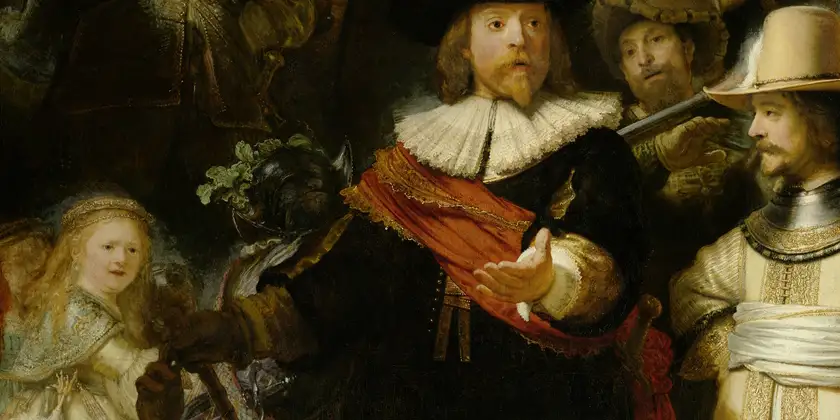
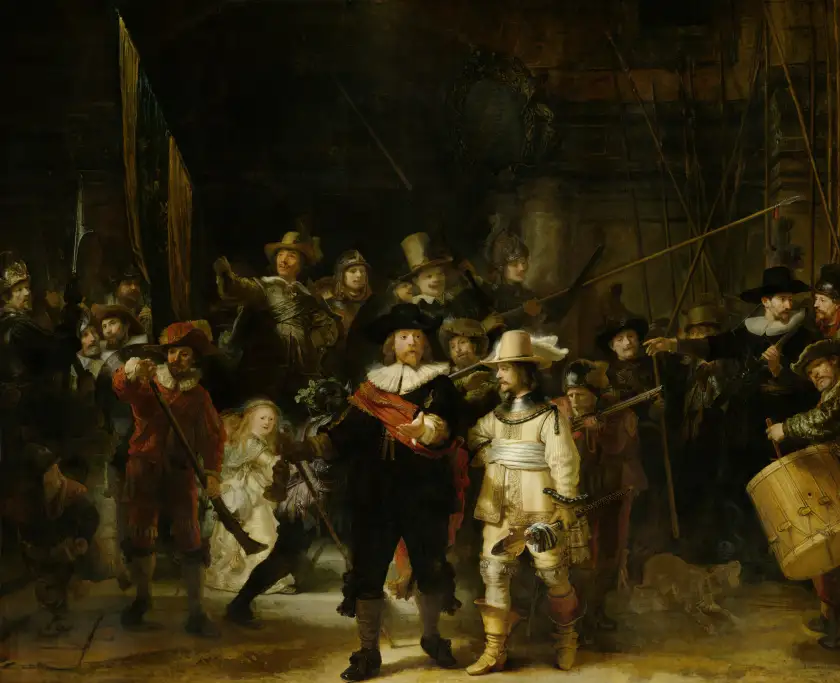
Before Rembrandt painted the glittering costume, raised weapons, faces, and moving figures of The Night Watch, he created something much simpler beneath them. He mapped the composition with pale paint over a brown surface.
This hidden stage was revealed during Operation Night Watch, the Rijksmuseum’s extensive examination of the 1642 painting. Advanced imaging detected a rough sketch made with beige paint rich in chalk. Researchers had not previously found this particular type of sketch layer in another painting by Rembrandt.
Drawing with Light Instead of a Dark Line
A ground is the prepared layer placed over canvas before painting begins. It creates a suitable surface for oil paint, but its color can also influence everything painted above it. Rembrandt used a brown quartz-clay ground for The Night Watch.
Working on this middle-dark color allowed him to plan the lights with pale paint instead of drawing the entire composition in dark lines over a light surface. Imaging that maps calcium revealed the chalk-rich sketch, especially in places where it was covered by only a thin final layer. Rembrandt supplemented these light shapes with fluid dark brown or black lines.
The result was an efficient tonal plan. Pale paint introduced the main illuminated masses. Dark strokes indicated selected contours and shadows. The brown surface already supplied the middle value between them.
The Ground Became Part of the Picture
Rembrandt did not carefully cover every part of this preparation. Away from the principal illuminated figures, some final passages consist of only one or two paint layers. In Sergeant Rombout Kemp’s outstretched hand, exposed brown ground forms the shadows between the lighter parts of the fingers and palm.
The dog at the lower right was painted with similar economy. Its outline and volume were first established with the light chalk-rich sketch. Rembrandt then added thin surface paint while allowing areas of the brown ground, and probably parts of the sketch, to remain involved in the modeling.
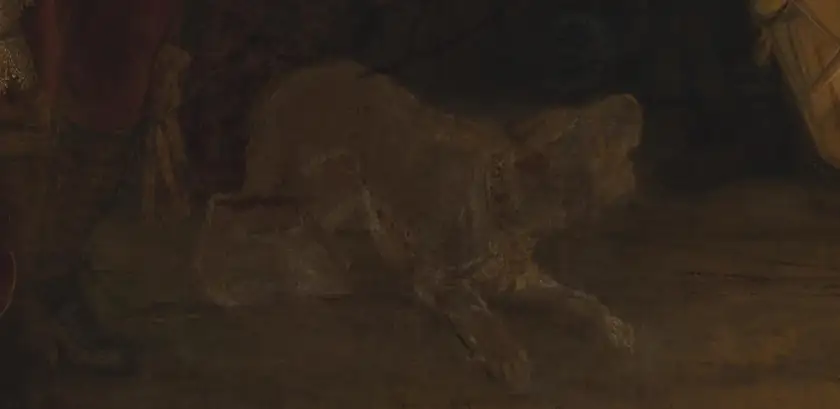
Some pale sketch paint is easier to see today because later cleaning treatments abraded the thin paint above it. Researchers also believe that chemical change has made the exposed sketch look lighter than Rembrandt intended. Therefore, not every whitish patch visible on the dog represents its original appearance.
A Composition Still in Motion
The newly revealed sketch was not a fixed design that Rembrandt followed mechanically. It records his search for the composition. He initially included more lances, suggested an additional sword, placed Rombout Kemp’s leg differently, and gave Claes van Cruijsbergen’s helmet feathers that were later removed.
These changes show that the painting developed on the canvas. The early sketch established movement and volume without solving every detail. Rembrandt could shift a leg, remove a weapon, or simplify a silhouette as he judged the whole scene.
For a modern painter, this offers a practical method. Begin on a safely prepared, middle-toned surface. Indicate the main illuminated shapes with light paint. Add a few thin dark lines to clarify direction and overlap. Preserve the ground where it already provides the correct halftone. Build opaque highlights only where the strongest light is needed.
The goal is not to leave areas unfinished. It is to recognize when the surface beneath the image is already doing useful visual work.
Begin with the Whole Picture
A complex painting does not have to begin with details. Rembrandt first organized light, darkness, movement, and large masses. Individual features came later.
At Old Masters Academy, students learn to build paintings in a similarly logical sequence using modern materials. Online video lessons allow you to pause at each stage, repeat a demonstration, and understand why the underpainting matters before moving to the final surface. Tutor feedback helps you see whether your tonal structure is supporting the image.
You may be beginning your first painting or returning to art after many years. Either position is a valid starting point. Join Old Masters Academy as a student and learn how a simple foundation can support an ambitious work.
Learn time-honored oil painting techniques of the Old Masters!
What you will get:
- Instant access to all 60 multi-part video lessons
- A lifetime membership
- Personal coaching by the course tutor
- Constructive critiques of your artworks
- Full access to the Art Community
- Exhibition space in the Students Gallery
- Members-only newsletters and bonuses
- Old Masters Academy™ Diploma of Excellence
How you will benefit:
The Old Masters Academy™ course is very comprehensive, yet totally beginner friendly. All you need to do is watch video lessons one by one and use what you’ve learned in your creative projects. You will discover painting techniques of the Old Masters. This is the best art learning experience you can have without leaving your home. All information is delivered online, including personal support by the course tutor.