Small grooves reveal how he planned a living figure without a finished drawing on the canvas
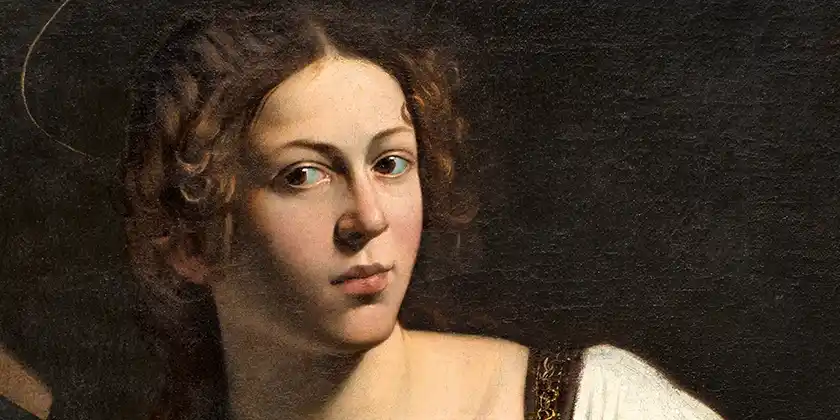
A line across Saint Catherine’s mouth is neither a crack nor a brushstroke. It is a groove that Caravaggio deliberately pressed into the prepared surface before painting her face. Similar marks locate her chin, shoulder, torso, hip, and the broken wheel beside her. These grooves reveal how Caravaggio organized a picture.
The painting dates from 1598-1599 and was made in oil on linen canvas. Caravaggio covered the fabric with an even light brown ground, the prepared layer that seals the canvas and provides a stable color for painting. While it was still malleable, he dragged a pointed object through it. Raking light, directed across the surface from one side, now makes the resulting grooves visible. The museum cannot identify the tool, so the popular claim that it was definitely a brush handle remains unproven.
The incisions were not a complete outline. They formed a spare map. Some fixed the level of the mouth and chin; others established an early shoulder, the curve of the body, and the wheel. Several match the finished painting, but Caravaggio lowered the shoulder, changed both hands, and tested different finger positions. X-rays confirm these revisions, while infrared examination did not reveal a clear, complete preparatory drawing. The evidence shows planning, but also a plan that could change.
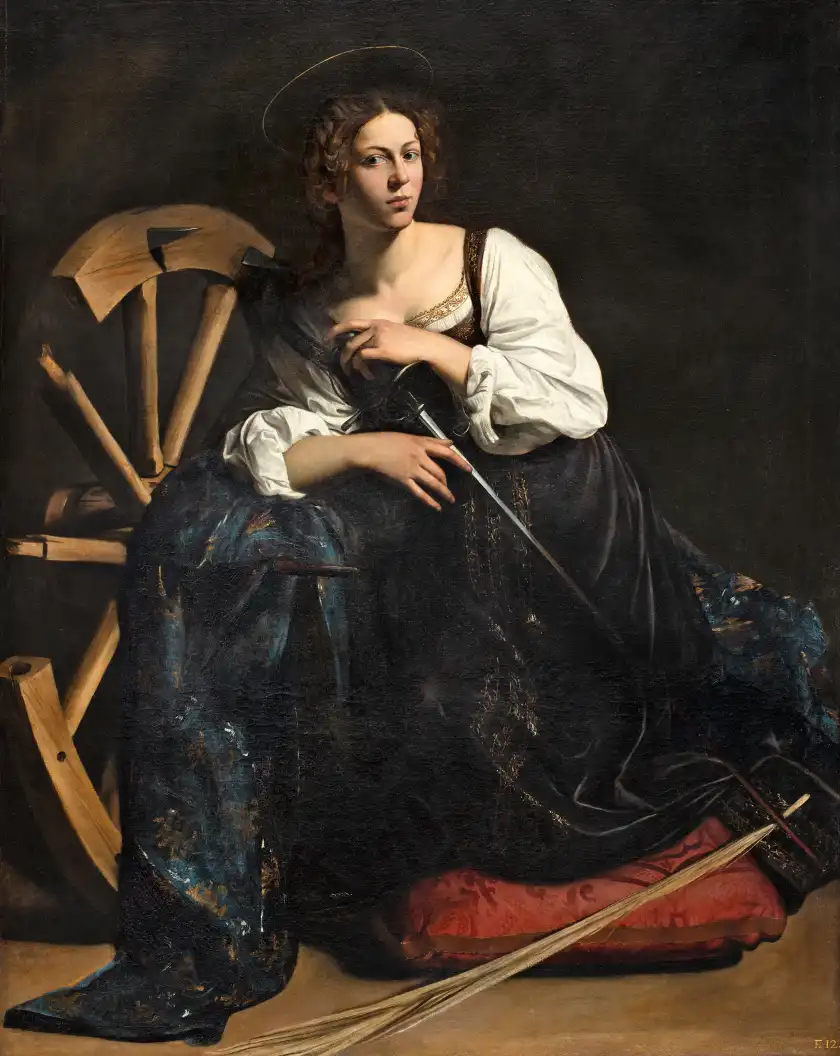
Could these grooves have helped him work with live models? This is a strong scholarly interpretation, not a laboratory fact. National Gallery researcher Larry Keith proposed that incisions and quick painted indications called abbozzo fixed the positions of figures and helped models return to established poses during later sittings. An abbozzo is a rough block-in made with broad strokes instead of a finished underdrawing. Such reference points would be useful when a hand, head, or shoulder had to return to the same place under the same light.
The grooves did not simply replace drawing. No firmly attributed drawing on paper by Caravaggio survives, but this does not prove he never drew. In The Supper at Emmaus, researchers found dark brown painted lines around complex still-life objects. For figures, he often used fewer incisions and broad painted guides. He selected a practical tool for each problem.
Saint Catherine also shows how much changed after this first map. A dress sample contains the brown ground, a thin whitish layer, two red layers from an earlier version, and final purple-blue paint made with lapis lazuli, azurite, cochineal carmine, coal, lead white, and earth pigments. The cloak has an azurite base beneath a thicker layer containing lapis lazuli and coal. A glaze is a thin, transparent film that enriches color without hiding what lies below. Thin paint lets warm lower layers affect the hue; thicker blue paint looks cooler and more solid.
For painters today, the lesson is not to scratch every ground. Establish a few reliable anchors before chasing detail. Mark the head, hands, major joints, and important objects. Block in the largest light and shadow shapes, then leave room for correction. Caravaggio was direct, but not careless.
Caravaggio’s hidden marks remind us that confident painting begins with clear decisions. At Old Masters Academy, students learn to see what lies beneath a finished image: the first placement, the tonal block-in, the transparent passages, and the final accents. These principles are demonstrated with modern materials through online lessons that can be replayed while you work at home, with constructive tutor feedback when you need direction. You do not need to live near an art school, begin at a certain age, or already paint at an advanced level. Join Old Masters Academy as a student and turn your wish to paint into a practical, steady process.
Learn time-honored oil painting techniques of the Old Masters!
What you will get:
- Instant access to all 60 multi-part video lessons
- A lifetime membership
- Personal coaching by the course tutor
- Constructive critiques of your artworks
- Full access to the Art Community
- Exhibition space in the Students Gallery
- Members-only newsletters and bonuses
- Old Masters Academy™ Diploma of Excellence
How you will benefit:
The Old Masters Academy™ course is very comprehensive, yet totally beginner friendly. All you need to do is watch video lessons one by one and use what you’ve learned in your creative projects. You will discover painting techniques of the Old Masters. This is the best art learning experience you can have without leaving your home. All information is delivered online, including personal support by the course tutor.