
The hidden orange foundation and crimson glazes inside The Ambassadors
In Hans Holbein the Younger’s The Ambassadors of 1533, Jean de Dinteville’s pink satin doublet flashes between pale rose and deep crimson. Yet its brilliance did not begin with pink. Technical examination found a strong orange-red underpainting beneath the visible modeling. Holbein assigned different jobs to successive paint layers instead of mixing the final color in one pass.
The oak panel was prepared with a natural chalk ground and a mid-gray priming of lead white and fine black. A ground creates a smooth painting surface; a priming is the first toned layer over it. Holbein began the doublet with an intense orange red composed mainly of vermilion, plus some lead white and red lake. This underpainting established a warm, saturated base before the lighter folds were modeled.
Over it, he built the fabric with pink mixtures of lead white and red lake. These passages were comparatively opaque, meaning they blocked much of the light and gave the folds solid form. Some highlights were deliberately pale.
Holbein covered them only thinly with final translucent, red lake-containing layers, allowing their brightness to remain visible. The contrast between light, opaque modeling and transparent finishing color creates the impression of glossy satin.

A glaze is a thin transparent or semitransparent layer of colored paint. Light travels through it, reflects from the lighter paint underneath, and passes back through the glaze, so the upper layer changes color without hiding the modeling. The Getty Conservation Institute’s technical glossary identifies lake pigments as especially suitable for this effect. Traditional red lakes were made by attaching a soluble dye to a colorless mineral substrate, producing a translucent pigment often used for glazing.
High-performance liquid chromatography, or HPLC, separated and identified dyes in samples from the doublet. It detected colorants from madder roots and from lac and kermes insects. The result is secure, but their exact order is not. The catalogue proposes at least two red lakes: a more orange-red madder lake probably in the lower layers, and one or two crimson lakes based on lac and kermes in the final glazes. It states that the paint cross-sections – tiny samples viewed from the side under a microscope – could not confirm this placement. This separates measured evidence from scholarly interpretation.
Chemical analysis also identified linseed oil as the binder. Heat-bodied linseed oil with some pine resin was detected in areas requiring greater gloss and color depth, including the pink doublet. Heat-bodied oil is oil heated before use to make it thicker and improve its drying properties. This suggests that Holbein’s satin effect depended on both pigment and medium, but the historic mixture should not be treated as a ready-made recipe for modern painters.
For today’s artist, the practical lesson is to separate form from color. First establish a warm base. Next model light and shadow with more opaque mixtures. Finally, adjust saturation and depth with restrained transparent glazes after the lower paint has dried. Keep highlights lighter than the desired finish because a red glaze will color and usually darken them. Test the sequence on a small panel, using modern, stable pigments and compatible mediums rather than copying historic materials blindly.
At Old Masters Academy, museum and conservation research becomes practical training in layered painting, underpainting, glazing, and the balance between transparent and opaque passages. Students learn to apply Old Master principles with modern materials through online video lessons that can be replayed and studied at home at a comfortable pace. Tutor support and constructive critiques help turn technical knowledge into deliberate painting decisions.
Age, location, and previous experience do not have to prevent you from beginning. Explore the Academy’s approach, become a student of Old Masters Academy, and begin your artistic journey one carefully judged layer at a time.
Learn time-honored oil painting techniques of the Old Masters!
What you will get:
- Instant access to all 60 multi-part video lessons
- A lifetime membership
- Personal coaching by the course tutor
- Constructive critiques of your artworks
- Full access to the Art Community
- Exhibition space in the Students Gallery
- Members-only newsletters and bonuses
- Old Masters Academy™ Diploma of Excellence
How you will benefit:
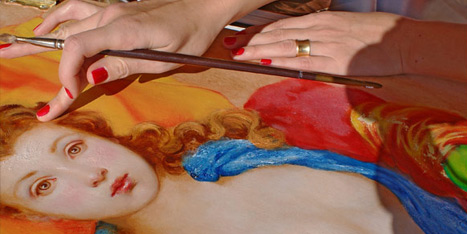
The Old Masters Academy™ course is very comprehensive, yet totally beginner friendly. All you need to do is watch video lessons one by one and use what you’ve learned in your creative projects. You will discover painting techniques of the Old Masters. This is the best art learning experience you can have without leaving your home. All information is delivered online, including personal support by the course tutor.