Old Masters Academy

how-to-paint-can support themselves with art

I was bombarded with the usual “no one can support themselves with art” …

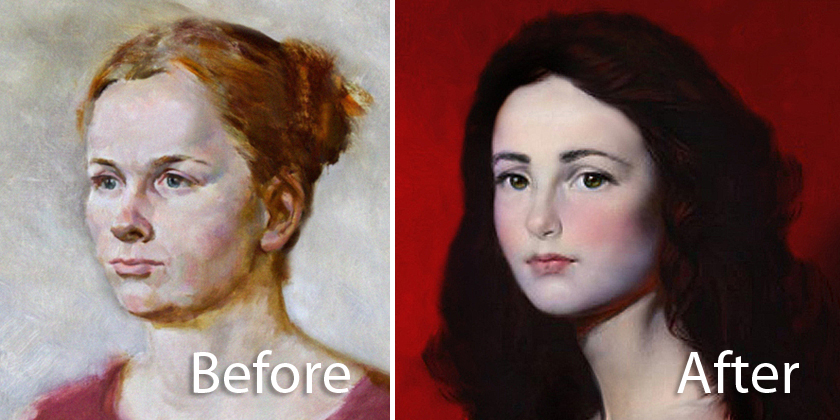
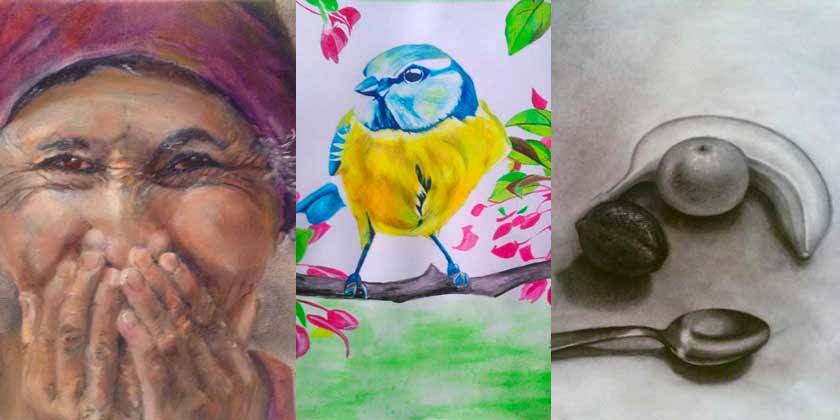
Artwork by Karen Ferrand Carroll

… Of course when it came to a course of study in school I was bombarded with the usual “ study something practical” and “no one can support themselves with art”.

Fast forward through the years, marriage, kids, job, bills, parents and any my time got pushed to the back. Grab a little time here and there, painted when I could. Self learn from whatever I can sneak in. I feel I was blessed with the ability to see with the wonder and fascination so many of us out grow or put aside because ‘it is time to grow up’. …

how-to-paint--like-classical-painting

I like classical painting

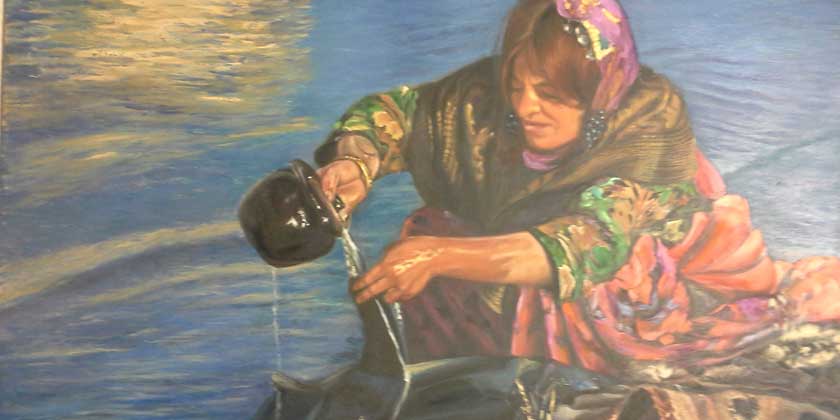
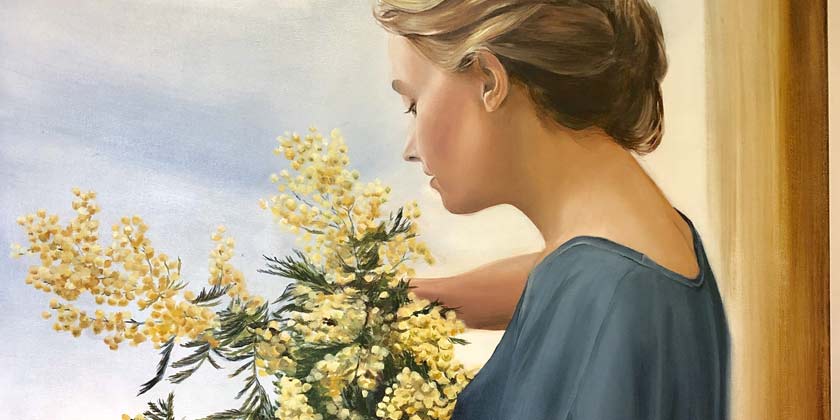
Artwork by Zhou Xu

I am a Chinese immigrant and my English is not very good. I like drawing since I was a child. I graduated from Shanghai academy of fine arts and majored in sculpture. I worked for 35 years on animated films. My animation won many awards. I live in Las Vegas now, mostly on oil portraits. Not too much emphasis on commercialization.

Painting is the most precious content in my life. I am always looking for the techniques and connotations of classicism. …

how-to-paint-I always kept practicing on my own

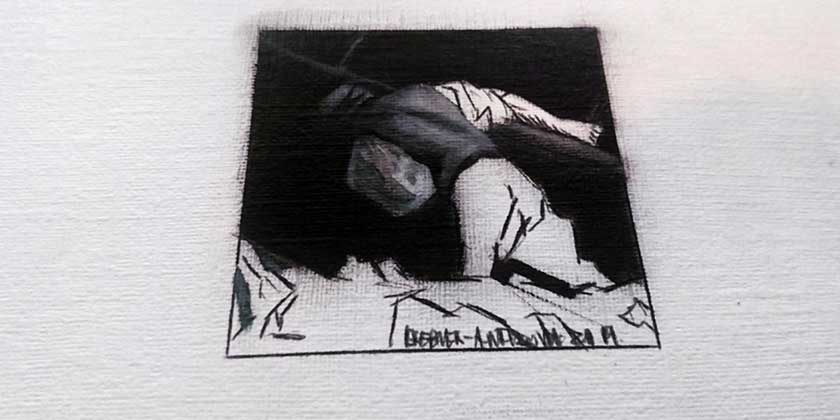
I always kept practicing on my own …

Though I have been drawing and painting for many years I am still not able to draw what I imagine or create any drawing on my own, which is one of the biggest struggles I have.

I just want to get better every time.

I was browsing for some drawing lessons when I found the old masters academy course. I think the skills you share is what’s missing in me as an art lover. And so glad that I found this course. …

I have never had any painting classes before this course

I have never had any painting classes before this course

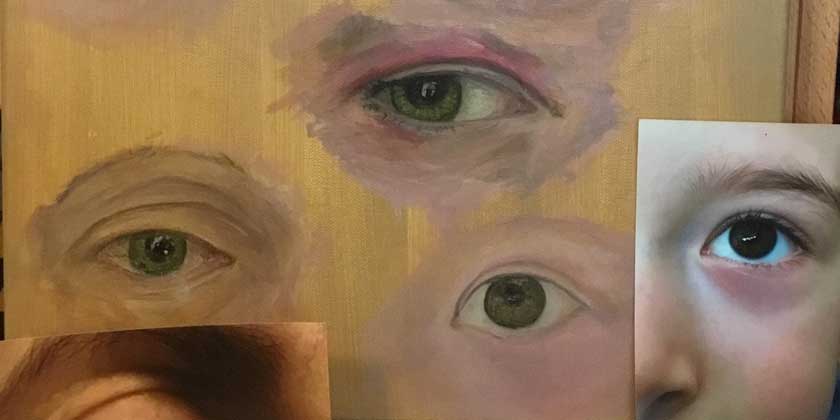
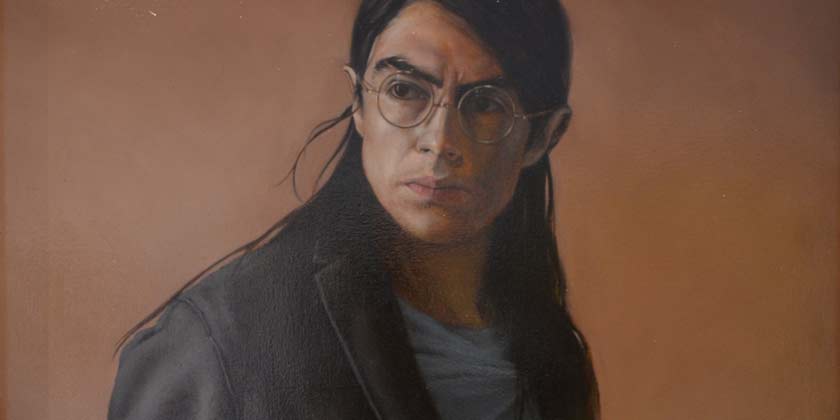
Artworks and story from Alexandra Martins

Hello Natalie! 

It has been a while since I started this online oil painting course, but my job (I’m a military) has taken a turn and I haven’t been able to paint much. Anyway, I’ll return home soon, I hope, and I’m already pulling my sleeves up to continue this course, can’t wait to be able to do that!

I have never had any painting classes before this course and I’ve already learned a lot from it.

I have decided to send you my artworks for critique.

salai-how-to-paint-like-Leonardo-his-students-apprentice

Leonardo’s relationship with his students and apprentices

by Rosily Roberts

Francesco Melzi was, according to historian Vasari, a Milanese nobleman, who inherited many of Leonardo’s manuscripts, instruments, books and drawings. While Leonardo complemented his abilities as a painter, no known paintings by him survive. He has often been exalted as Leonardo’s favourite student, and Leonardo often praised him in letters.

Melzi is responsible for one of the few surviving portrait of Leonardo, which was most likely execute towards the end of his life. It is likely that this is the portrait of Leonardo that Vasari saw in Melzi’s house, and that later become the frontispiece for the Leonardo chapter in Vasari’s Lives of the Artists.

how-to-paint-as-Leonardo-Da-Vinci-apprenticeship

Leonardo da Vinci apprenticeship

by Rosily Roberts

In 1472 Leonardo was accepted into the painters’ guild of Florence, however, he remained in his teacher’s workshop for five more years, before working independently in Florence until 1481. Many of his pen and pencil drawings exist from this period, as well as technical sketches, including pumps, military weapons and mechanical apparatus, evidencing his interest in and knowledge of technical matters, even early on in his career.

Some of Leonardo’s artistic concerns originate with Verocchio, such as the twisting pose known as the figura serpentinata and the study of contrasting expressions. …

how-to-Leonardo-his-painting-techniques-learned-from-the-Old-Masters

Leonardo Da Vinci was no stranger to failure and rejection

by Rosily Roberts

…Leonardo’s Last Supper brought about a huge shift, not only in the genre of Last Supper paintings, but art in general. He imbued the scene with a movement, expression, drama and realism that had never been seen before. Unfortunately, Leonardo’s experimental painting technique was heavily flawed, and the pigment did not stick to the wall, resulting in the degradation of the image.

Leonardo always regarded himself as something of a failure. In 1490, he tried to get the commission to design a dome for the cathedral of Milan, but his plans were rejects, as were his plans for casting the bronze doors of a cathedral in Piacenza. Leonardo was no stranger to failure and rejection.

How to paint like Titian-old masters

Titian’s life and painting methods

Titian was most well-known for his bold use of colour, which he achieved through seeking out rare pigments and using them in rich and saturated forms, as well as carefully balancing complementary colours together. He also focused on the effect of light on colour, and experimented with light effects to emphasize his contrasting colours. His work exemplifies the Venetian preference for colour, a definitive aspect of Venetian art as opposed to that of Florence. …

how-to-Rubens and his painting techniques learned from the Old Masters

Rubens and his painting techniques learned from the Old Masters

by Rosily Roberts

… He used a large amount of greys, blues and greens and a variety of flesh tones, often incorporating deep and luscious reds and gold in exuberance. He employed various undertones to create the illusion of depth, and define light and textures as realistically as possible. He used an abundance of colour, which he felt would dramatize his images, and applied the paint onto the canvas in thick layers in order to make the image more prominent. In order to accentuate the tones of his subjects in various lights, he used a wide range of flesh tones. He is known for painting human flesh in an expressive way, emphasizing the body’s curves and bumps, or how it looks when engaged in dynamic movement. …

how-to-paint-Old-Masters-Rembrandt

Rembrandt’s life and painting techniques

by Rosily Roberts

While the exact technique Rembrandt used when creating his impastoed surfaces is unknown, it is believed that he built up thick layers of opaque paint, allowing each layer to dry instead of mixing the paint on the surface while wet. After executing highlights in thick layers, he would wholly or partially over these with thin paint used as a glaze.

Watercolor Academy
Life Drawing Academy
Drawing Academy
Anatomy Master Class